Researched by the Inspire21 editors from the sources listed at the end. About our story labels
On Christmas Eve 1964, Bob Hope’s party was driving into Saigon from the airport when a bomb went off at the Brinks Hotel, a barracks for American officers.
Hope had come to South Vietnam to put on Christmas shows for American troops. Instead, his first evening began beside a disaster. A United Press International report, printed in Stars and Stripes, said Hope personally shook hands with 42 American victims of the blast. His own hotel, the Caravelle, stood less than 100 yards from the burning barracks.
That night he sat down to dinner with blood on his shirt cuffs. He did not notice until a reporter pointed it out.
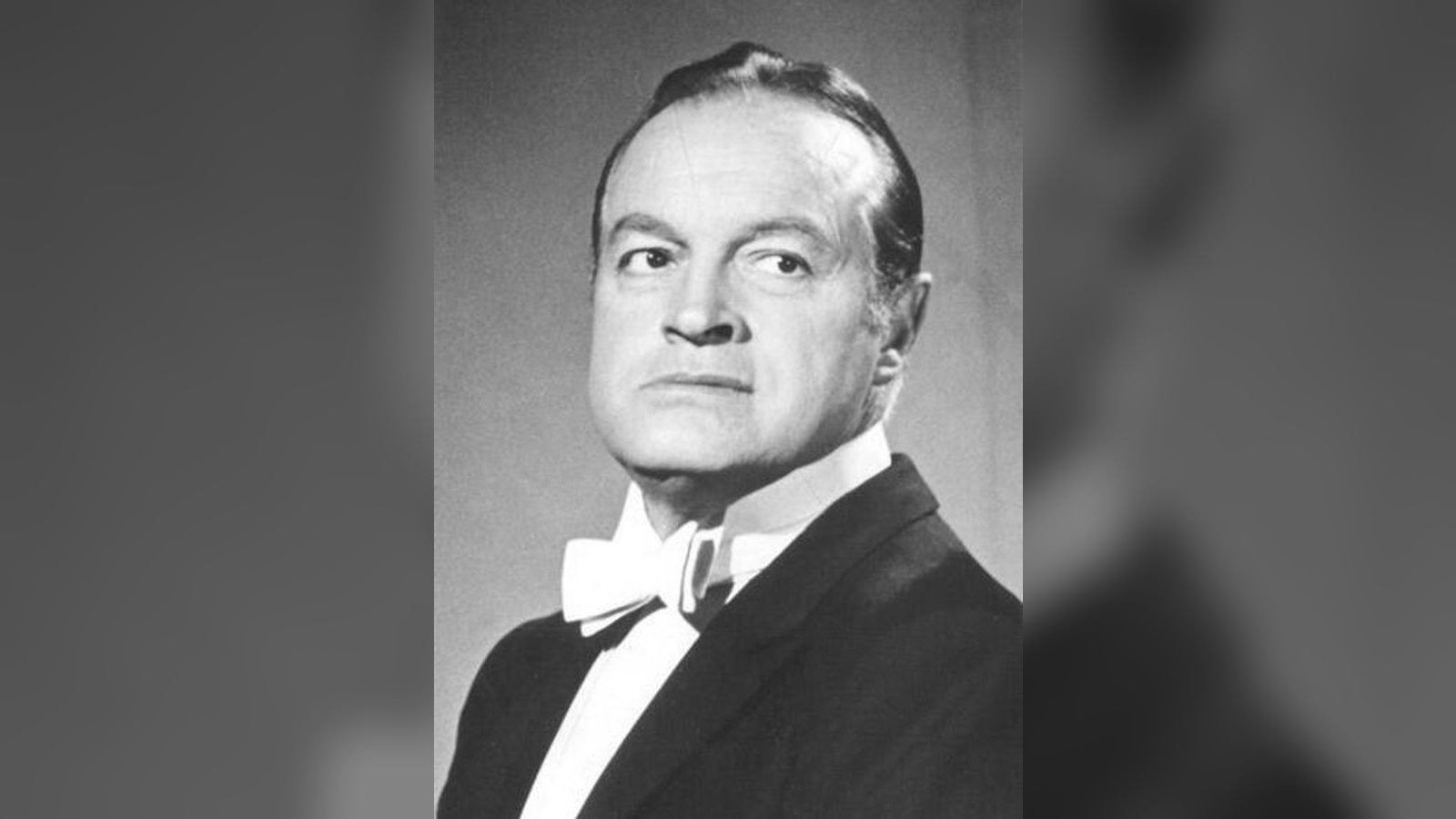
Bob Hope was a comedian, actor and singer. But to many Americans in uniform, he was the man who came to see them far from home, often at Christmas.
For about half a century, Hope took USO shows to American troops overseas. The press called him “America’s No. 1 Soldier in Greasepaint.” The GIs called him “G.I. Bob.”
It started on May 6, 1941, with a radio show for the airmen stationed at March Field in Riverside, California. On stage he carried a golf club, a sign of his lifelong love of golf, and he used it the way an old vaudeville song-and-dance man used a cane.
A Christmas in Germany, 1948
In December 1948, thousands of American airmen were spending Christmas in Europe. About 23,015 were stationed there that Christmas, most of them supporting the Berlin Airlift.
The Library of Congress says President Truman asked for a Christmas show for those tired airmen. The USO says the Pentagon asked Hope to go. Either way, he went, and Irving Berlin was part of his troupe.
On Christmas Eve, Hope’s “Christmas Caravan” played a theater in Wiesbaden, Germany, a key staging area for the airlift. That day Hope rehearsed with actress Irene Ryan. Many of the jokes that night were about the airlift itself. Irving Berlin also led a chorus of airmen in “Operation Vittles,” a song he wrote for them.
At another Christmas show, at Tempelhof in Berlin, General Jimmy Doolittle joined Hope on stage as a guest. Hope and his troupe also recorded a radio episode of “The Bob Hope Show” for the troops in Germany.
That trip became the first of Bob Hope’s yearly Christmas tours. He joked that the tours “saved me a fortune in Christmas presents.”
Bringing the Troops Home for Christmas
In 1957 his Christmas tours began coming home on television. The specials brought the faces of the troops into American living rooms.
The families wrote back. Many letters came in. One, kept today in the Library of Congress, is from a soldier’s wife. She quotes her husband describing how the show ended: the GIs joined the performers in singing “Silent Night.”
Hope did not stop at the stage. On his tours he made a point of visiting hospital wards. He believed wounded soldiers wanted cheer, not sympathy. And he felt he got more from those tours than he gave.
Christmas in Vietnam
That brings us back to Saigon in 1964. When Hope arrived on Christmas Eve, he told the officials who welcomed him, “It’s kind of a kick to be here on Christmas Eve.”
His troupe that year included Jerry Colonna, Janis Paige, Anna Maria Alberghetti, Jill St. John, Miss World Ann Sidney, and Les Brown and his band. They put on a two-hour show while fighter-bombers and helicopters flew overhead.
Hope went back to Vietnam the next Christmas, and the next. He went nine Christmases in a row, from 1964 through 1972.
At Christmas 1972, on the tiny Indian Ocean island of Diego Garcia, Seabees worked around the clock to build a runway so Hope’s C-141 could land. It was his last USO show of the Vietnam War. Seabee Ron Ronning, who was 19, remembered that the crowd stood and cheered from the moment Hope came on.
One Last Tour
Bob Hope kept going long after most people retire. In December 1990, at 87, he made his last USO tour, to troops serving in Operation Desert Shield in Saudi Arabia and Bahrain.
This time it was a family trip. His wife, Dolores, went with him. So did his daughter Linda, who produced his television specials for the last 20 years of his career. His last holiday special, “Hopes for the Holidays,” aired in 1994.
Bob Hope died on July 27, 2003. But for the troops he visited, he was the famous man with a golf club who walked onto a stage far from home, told them some jokes, and reminded them that they had not been forgotten.
Is It True?
“Bob Hope’s Christmas shows began in World War II.” His USO work did begin then, with that radio show at March Field on May 6, 1941. But the Library of Congress calls his 1948 Christmas show for the Berlin Airlift airmen the first of his annual Christmas tours. The safest way to say it is that his first USO Christmas tour came in 1948.
“The President sent him to Berlin.” Maybe. The Library of Congress says the 1948 show came at President Truman’s request. The USO says the Pentagon asked Hope to go. Sources tell it both ways.
“The Saigon bomb went off just as he arrived.” It was certainly close. A report printed at the time said his party was driving in from the airport when the bomb exploded. Later accounts give the timing a little differently, but all agree it was a very near thing.
In His Own Words
- On arriving in Vietnam, Christmas Eve 1964: “It’s kind of a kick to be here on Christmas Eve.”
- Joking about his Christmas tours: they “saved me a fortune in Christmas presents.”
A Lesson for Today
- Bob Hope could have spent Christmas at home. Instead, year after year, he went to troops far from home.
- He believed wounded soldiers wanted cheer, not sympathy. Sometimes the kindest gift we can give anyone who is hurting is a visit and a smile.
- He felt he got more than he gave. Ask your group: who might be far from home or alone this Christmas, and how could we bring them some cheer?
Sources
- Library of Congress, "Entertaining the Troops – Hope for America"
- USO, "For 40 Years, Bob Hope USO Christmas Shows Brightened the Holidays for Deployed Troops"
- USO, "Bob Hope USO Shows: The One-Man Morale Machine"
- National WWII Museum, "Hope for the Holidays"
- Stars and Stripes, "Bob Hope brings Christmas cheer to troops in Vietnam" (Dec. 25, 1964)
- Stars and Stripes, "From the archives: Christmas Eve with Bob Hope, 1948"
- U.S. Air Forces in Europe, "Lessons from the Berlin Airlift, 75 Years Later"
- Bob Hope USO, "Bob Hope"
Reading this aloud?
- Good for
- A Veterans Day or Christmas program, a senior-center history hour or a church newsletter
- Time
- About 7 minutes read aloud
- Fits a lesson on
- serving others, remembering the lonely at Christmas, generosity, honoring veterans
Tip: Open slowly with the Saigon bombing and pause after the blood on his shirt cuffs; then lighten your voice for his joke about saving a fortune in Christmas presents.
Questions to talk about
- Why do you think Bob Hope kept going back to the troops year after year, even into his late eighties?
- He believed wounded soldiers wanted cheer, not sympathy. What helps you most when you are hurting?
- Have you ever spent a holiday far from home? What made it feel less lonely?
- Who might be far from home or alone this Christmas, and how could we bring them some cheer?
Lead a group every week? Get the free large-print Read-Aloud Pack, four stories with questions and memory care prompts, ready to print.
From inspire21.com/bob-hopes-christmas-with-the-troops/
More like this in Christmas stories.
Did this story lift you up?
Share it with someone
Up next

The Magic of Three Days
Patt Barnes meets a smiling old flower lady outside a cathedral who shares her secret for hard times, drawn from Good Friday and Easter: wait three days.