Researched by the Inspire21 editors from the sources listed at the end. About our story labels
There was a time when Walt Disney took his bath once a week at a train station.
He was living in his studio then, in Kansas City. He had moved out of his apartment, and his little cartoon company was sinking fast. He was barely into his twenties.
December 5, 2026, marks 125 years since Walt Disney was born in Chicago, in 1901. Most people know how his story turned out: Mickey Mouse, an Academy Award, Disneyland. Fewer know how it nearly ended before it began.
When Walt was about four, his father moved the family from Chicago to a small farm near Marceline, Missouri. It was a short chapter of his life, but it left its mark. The town’s Main Street later inspired Main Street U.S.A. at the Disney parks. And it was at the Marceline grade school that Walt first got a taste of show business.
Around age nine, he moved with his family to Kansas City. There the boy helped his father and brother deliver the Kansas City Star, starting at 3:30 in the morning.
In 1917 the family moved back to Chicago. At McKinley High School, Walt drew for the school paper and studied cartooning. His dream was to become a newspaper cartoonist. Then he left school to serve in World War I, driving an ambulance overseas with the American Red Cross Ambulance Corps.
Back in Kansas City, he went to work at the Kansas City Film Ad Company, and there he began animating. His short cartoon clips, known as “Laugh-O-grams,” played at the Newman Theater in town.
It was a start. In May 1922, when he was 20, Walt formed his own company, Laugh-O-gram Films. Local investors put in about $15,000. He rented five rooms on the second floor of the McConahay Building, at 31st and Forest.
Then came what looked like the big break. A company called Pictorial Clubs signed an $11,100 contract for a series of cartoons. Walt’s young studio made fairy tales: “Jack and the Beanstalk,” “The Four Musicians of Bremen,” “Goldi Locks and the Three Bears,” “Puss in Boots” and “Cinderella.”
But Pictorial Clubs went bankrupt before Disney was paid.
The money ran out. Walt gave his employees shares of stock instead of pay, and those shares later became worthless. He gave up his apartment and lived at the studio. Once a week, he went to Union Station for a bath.
There is a story, often told, that during these lean days he kept a tame mouse at his desk, and that the little creature helped inspire Mickey Mouse. No one can prove it. But it is a story people have loved to tell.
In January 1923, the building’s owner served Walt a summons for unpaid rent.
Even so, he was at work on one more picture. It was called “Alice’s Wonderland,” and it mixed a real, live girl with cartoon drawings. Its child star, Virginia Davis, signed her contract on April 23, 1923.
It was not enough to save the company. In July 1923, Laugh-O-gram Films filed for bankruptcy.
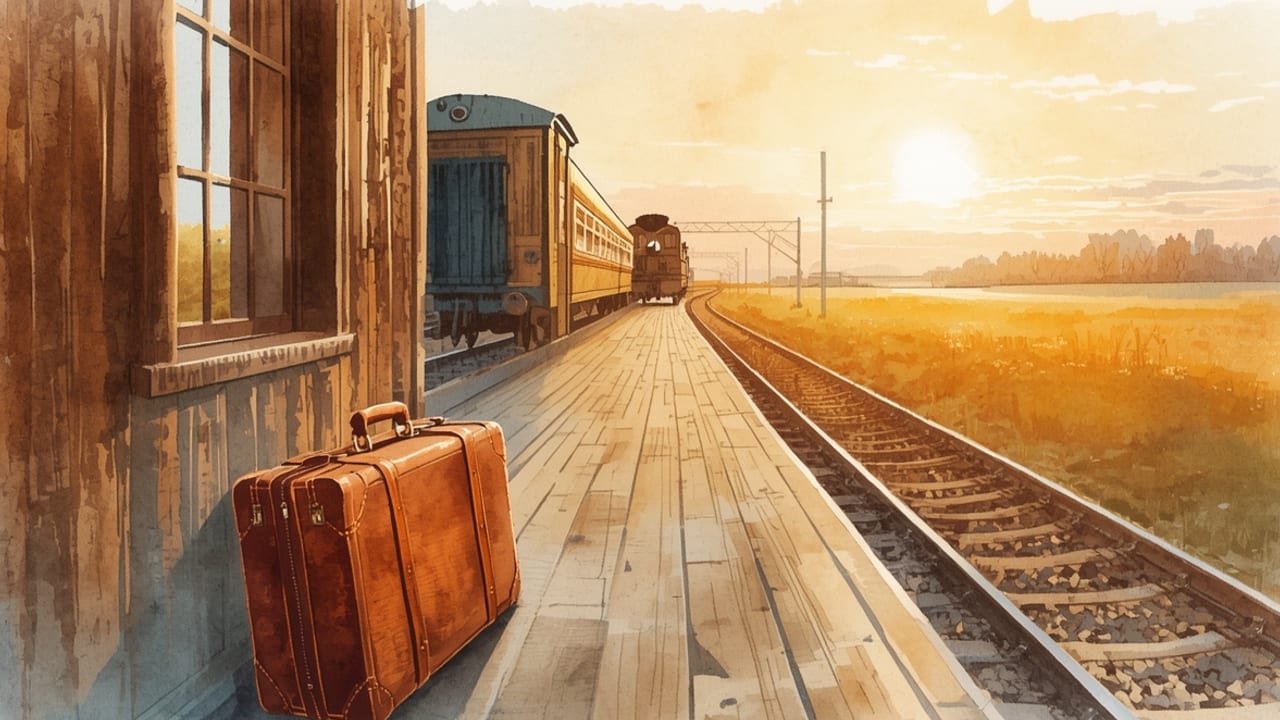
Many people would have stopped there. Walt went door to door instead, filming families for a small fee to raise money for a trip west. Then he sold his camera. And though he was broke, he bought a first-class ticket on the California Limited.
He was 21 years old. He left for Hollywood with $40 and the unfinished film of “Alice’s Wonderland.”
In Los Angeles he used the finished “Alice” cartoon to build a reputation. Several of his old Laugh-O-gram coworkers later followed him west. The young man who could not pay his rent in Kansas City would go on to create Mickey Mouse and build Disneyland. In 1942 he received an Academy Award and the Irving G. Thalberg Memorial Award.
Marceline stayed with him. In 1956, Walt and his brother Roy went back to Marceline and helped dedicate the town swimming pool. They were photographed at the “Dreaming Tree” on the old Disney farm.
Walt Disney died on December 15, 1966, in Burbank, California. He was 65.
In 2001, the Walt Disney Hometown Museum opened in Marceline. It sits in the town’s restored Santa Fe depot and holds hundreds of letters given by his sister, Ruth Disney Beecher.
The young man who once washed up at a train station is remembered today in one.
A Famous Line He Never Said
You have probably seen “If you can dream it, you can do it” on a poster with Walt Disney’s name beneath it. He never said it.
Disney archivist Dave Smith said the line was written by Imagineer Tom Fitzgerald for the Epcot ride Horizons in the 1980s. A copywriter named Sheralyn Silverstein says she wrote it in 1981 for a GE recruiting campaign. Whoever wrote it, the words are not Walt’s. His real story, of bankruptcy and a train ticket west, says more than the slogan does.
Words From the Road West
Looking back on arriving in Hollywood in 1923, Walt remembered how little he carried: “I came to Hollywood in a new pair of shoes.” He went on: “in half of the suitcase I put what paraphernalia that belonged to me. All the rest I had to leave.”
Walt passed along an old saying from Horace Greeley to Ub Iwerks, a fellow artist still in Kansas City: “Go west, young man, go west and grow up with the country.”
For a December 5 Gathering
Read aloud the list of fairy tales Walt’s first studio made, and then remind the group that the company that made them never got paid.
Then ask: Walt sold his camera and bought a first-class ticket when he had almost nothing left. When have you, or someone you love, stepped forward in hope before things were settled? Give each person a moment to share, and close by naming one small step someone in the room might take this week.
Sources
- Walt Disney, Encyclopaedia Britannica
- 100 Years Ago: Walt Goes West, Walt Disney Family Museum
- Laugh-O-gram Films Studio, Clio
- Walt Disney, Pendergast KC (Kansas City history)
- Tour of Walt Disney's Boyhood Home, Marceline, Missouri, Clio
- Marceline, Missouri, is the site of Disney's 'lost' park, CNN
- Laugh-O-Gram Studio, Wikipedia
- 8 Walt Disney Quotes That Are Actually Fake, Gizmodo
Reading this aloud?
- Good for
- A senior-center birthday program, a classroom history moment or a small-group talk on perseverance
- Time
- About 7 minutes read aloud
- Fits a lesson on
- perseverance, hope after failure, starting over, dreams
Tip: Pause after "Many people would have stopped there," then slow down for the camera sale and the first-class ticket, letting "$40 and the unfinished film" land before moving on.
Questions to talk about
- Why do you think Walt bought a first-class ticket when he had almost no money?
- What do you think kept him going after his company went bankrupt?
- Which place from your own childhood has stayed with you the way Marceline stayed with Walt?
- When has a setback in your life led to something good later on?
Lead a group every week? Get the free large-print Read-Aloud Pack, four stories with questions and memory care prompts, ready to print.
From inspire21.com/walt-disneys-first-studio-went-bankrupt-then-he-bought-a-train-ticket/
Did this story lift you up?
Share it with someone
Up next
Lilies of the Field - Inspiring Graduation Speech
This message is from a commencement speech made by a Pulitzer Prize winning author, Anna Quindlen, at Villanova University. By Anna Quindlen I'm a…