Researched by the Inspire21 editors from the sources listed at the end. About our story labels
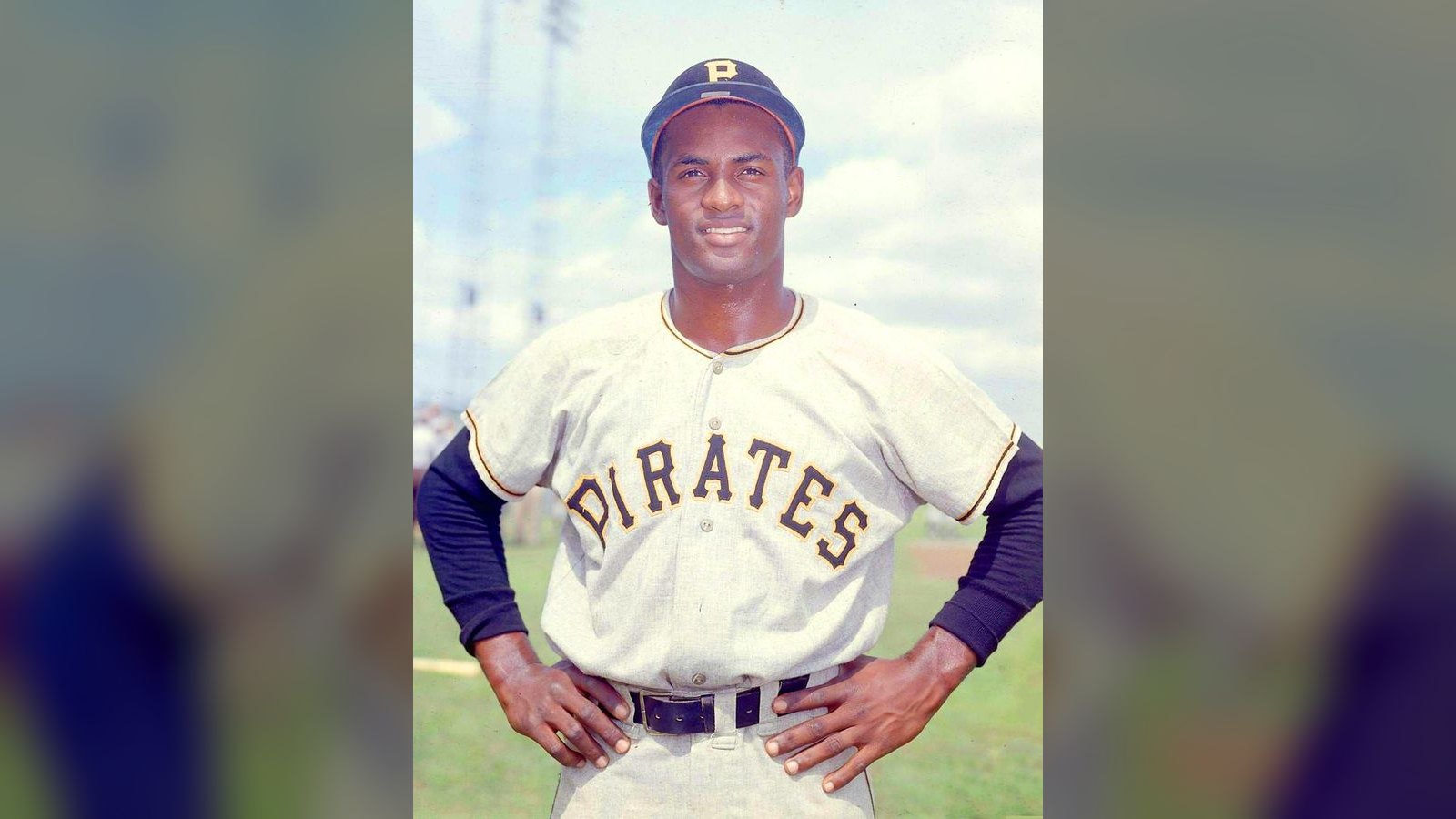
On December 30, 1972, a Pittsburgh Pirates star who had just collected his 3,000th hit was in the cargo area of San Juan International Airport in Puerto Rico. He was not there to sign autographs. He was helping load relief supplies onto an airplane by hand.
His name was Roberto Clemente. Three months earlier he had collected his 3,000th hit. Now, in the last days of the year, he was lifting boxes for families in a country shattered by disaster.
Roberto Clemente Walker was born on August 18, 1934, in Carolina, Puerto Rico. He grew up to play right field for the Pittsburgh Pirates, and he never played for anyone else. All 18 of his major-league seasons, from 1955 to 1972, were spent in a Pirates uniform.
He was very good at it. He was named an All-Star 15 times. He won 12 Gold Gloves and four batting titles. He was the National League’s Most Valuable Player in 1966, and he helped Pittsburgh win the World Series in 1960 and again in 1971. In that 1971 Series, at the age of 37, he hit .414 and was named the Series MVP.
On September 30, 1972, at Three Rivers Stadium in Pittsburgh, he hit a double before a crowd of 13,117. It was his 3,000th hit. Only ten players before him had reached that mark. He dedicated the hit to the fans of Pittsburgh and to Roberto Marín, the man who had first coached him in softball back in Puerto Rico. No one knew it then, but it was the last regular-season hit of his life.
Baseball was only part of Roberto Clemente’s year. He spent much of every off-season doing charity work, and 1972 was no different. He and his wife, Vera, were active in charity work in both Pittsburgh and Puerto Rico.
That same year he had traveled to Managua, Nicaragua, to coach Puerto Rico’s team at the Amateur World Series. Some of his charity work had already taken him to Nicaragua, and he had friends there.
Then, on December 23, 1972, just two days before Christmas, a magnitude 6.3 earthquake struck near Managua. The city was devastated. About 5,000 people were killed.
Clemente went to work almost at once. He began collecting supplies and sending them to Nicaragua. He put his own money into the effort. That Christmas week, instead of spending the holidays at home, he gave his days to the people of a city in ruins.
The help kept coming. He had already sent three cargo planes and a ship. Then he heard troubling reports. The goods, he was told, were not reaching the victims.
He decided to go along himself and make sure the supplies got into the right hands.
That is how he came to be at the San Juan airport on December 30, loading cargo with his own hands. There were far more supplies than his plane could carry. A man named Arthur Rivera offered to fly them for $4,000. Rivera did not tell Clemente that he had no crew. Clemente agreed to the deal.
The plane was a DC-7. It was delayed for hours by mechanical problems. Someone at the airport warned Clemente that it looked dangerously overloaded.
On New Year’s Eve, December 31, 1972, the DC-7 finally took off. Just after takeoff it went down into the sea off the coast near San Juan. All five people aboard were killed: Roberto Clemente; his associate Ángel Lozano; the plane’s owner and co-pilot, Arthur Rivera; the pilot, Jerry Hill; and the flight engineer, Francisco Matías.
Roberto Clemente was 38 years old. His body was never recovered. Among those who searched the waters was his teammate and close friend, Manny Sanguillén.
The Christmas giving of Roberto Clemente had never been done for show. The wider world learned how personal it was only because of how it ended.
Baseball moved quickly to honor him. Normally a player must wait five years before he can be voted into the Hall of Fame. On March 20, 1973, a special election set that rule aside, and Roberto Clemente was elected to the Hall. He was the first Latin American player ever inducted.
That same year, Major League Baseball renamed its award for sportsmanship and community service. Since 1973 it has been called the Roberto Clemente Award.
It carries the name of a man who collected 3,000 hits and four batting titles. It also carries the name of a man who spent the last days of his life gathering help for strangers, and one of his last days in an airport cargo area, loading boxes by hand for people who needed them.
After the Last Big Hit
On the day he reached 3,000 hits, September 30, 1972, Clemente spoke about the moment in plain, humble words.
Right after the hit, honoring the city that had cheered him for 18 seasons: “I dedicate this hit to the fans of Pittsburgh.”
Later that day, talking with reporter Milton Richman of United Press International: “I feel bashful when I get a big ovation. I am really shy. I never was a big shot and I never will be a big shot.”
A Famous Line, Checked Carefully
You may have seen this saying on many websites: “Any time you have an opportunity to make a difference in this world and you don’t, then you are wasting your time on Earth.” It is a line often credited to Clemente, but the pages that repeat it give no date, place or original source. It may be his, or it may not. His actions in December 1972 speak clearly either way.
Some accounts also say Clemente flew with “the pilot and three crew members.” In fact, one of the four men with him, Ángel Lozano, was not crew at all. He was Clemente’s associate.
For a Group This Christmas
A question to talk over: Clemente had already sent three planes and a ship. When he heard the help might not be reaching the people, he chose to go himself. Can you remember a time when someone went the extra step to make sure help actually reached you or your family?
A way to mark the season: December 23 is the anniversary of the Managua earthquake. A class, church group or circle of friends might pack a box together that week for a local food pantry or relief drive, and deliver it in person.
Sources
- National Baseball Hall of Fame, "Roberto Clemente"
- Baseball Hall of Fame, "Clemente elected to Hall of Fame only months after crash"
- Baseball Hall of Fame, "Clemente's 3,000th hit nearly made history twice"
- Britannica, "Roberto Clemente"
- History.com, "Baseball star Roberto Clemente dies in plane crash"
- Clemente Museum, "1972: The Final Months"
- Wikipedia, "1972 Puerto Rico DC-7 crash"
- SABR Games Project, "September 30, 1972: Roberto Clemente collects 3,000th career hit in final at-bat"
Reading this aloud?
- Good for
- A Christmas-season sermon illustration, a men's breakfast or a senior group with baseball fans
- Time
- About 8 minutes read aloud
- Fits a lesson on
- generosity, serving others, humility, giving at Christmas
Tip: Pause after "He was not there to sign autographs," then slow down for the New Year's Eve takeoff and let the list of the five men aboard settle before reading about the award.
Questions to talk about
- Why do you think Clemente chose to go to Nicaragua himself instead of just sending more supplies?
- What does his line "I never was a big shot" tell you about the kind of man he was?
- When has someone gone the extra step to make sure help actually reached you or your family?
- What is one way our group could give part of this Christmas season to people who need help?
Lead a group every week? Get the free large-print Read-Aloud Pack, four stories with questions and memory care prompts, ready to print.
From inspire21.com/the-week-roberto-clemente-gave-away-his-christmas/
More like this in Christmas stories.
Did this story lift you up?
Share it with someone
Up next

Because of Love
By Willy Eagle A brother and sister had made their usual hurried, obligatory pre Christmas visit to the little farm where dwelt their elderly parents with…