From the Inspire21 archive, collected since 2000. Original author often unknown. About our story labels
Author unknown. The story has been passed along by email and on the web for years. Below it, our editors tell what really happened.
The story as it’s usually told
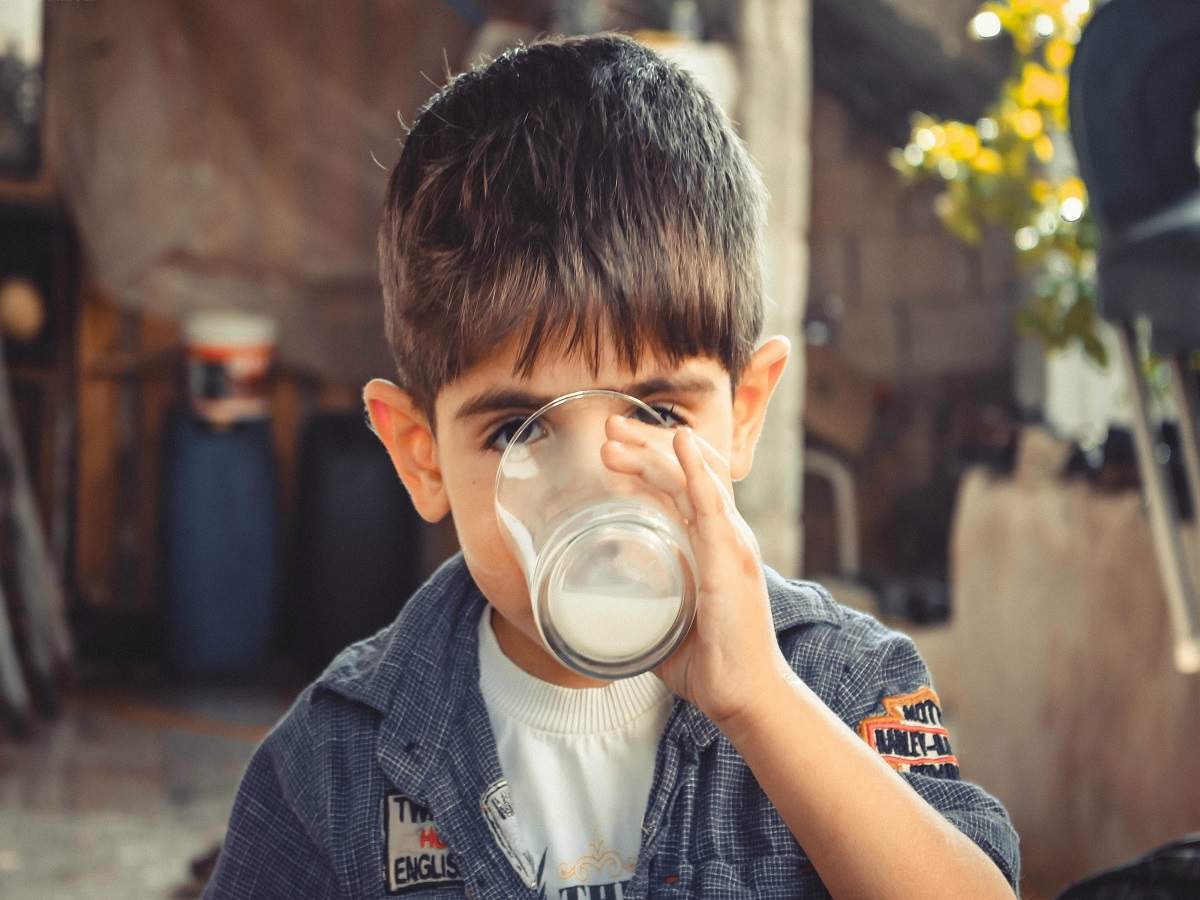
One day, a poor boy, who was selling goods from door to door to pay his way through school, found he had only one thin dime left, and he was hungry. He decided he would ask for a meal at the next house. However, he lost his nerve when a lovely young woman opened the door. Instead of a meal he asked for a drink of water. She thought he looked hungry so she brought him a large glass of milk. He drank it slowly, and then asked, “How much do I owe you?”
“You don’t owe me anything,” she replied. “Mother has taught us never to accept pay for a kindness.”
He said, “Then I thank you from my heart.”
As Howard Kelly left that house, he not only felt stronger physically, but his faith in God and man was stronger also. He had been ready to give up and quit.
Many years later that same young woman became critically ill. The local doctors were baffled. They finally sent her to the big city, where they called in specialists to study her rare disease.
Dr. Howard Kelly was called in for the consultation. When he heard the name of the town she came from, a strange light filled his eyes. Immediately he rose and went down the hall of the hospital to her room.
Dressed in his doctor’s gown he went in to see her. He recognized her at once. He went back to the consultation room determined to do his best to save her life. From that day he gave special attention to her case.
After a long struggle, the battle was won.
Dr. Kelly requested the business office to pass the final bill to him for approval. He looked at it, then wrote something on the edge and the bill was sent to her room. She feared to open it, for she was sure it would take the rest of her life to pay for it all. Finally she looked, and something caught her attention on the side of the bill. She read these words…
“Paid in full with one glass of milk.” Signed, Dr. Howard Kelly.
Tears of joy flooded her eyes as her happy heart prayed: “Thank you, God, that Your love has spread through human hearts and hands.”
There’s a saying which goes something like this: “Bread cast on the waters comes back to you. The good deed you do today may benefit you or someone you love at the least expected time. If you never see the deed again at least you will have made the world a better place.” And, after all, isn’t that what life is all about?
What really happened
Added by the Inspire21 editors and checked against the sources below.
Dr. Howard Kelly was real, and so was the glass of milk. According to his biography, written by his longtime assistant Audrey W. Davis, he was on a walking trip up through Northern Pennsylvania one spring day. He stopped by a small farm house for a drink of cool spring water. A little girl answered his knock. Instead of water, she brought him a glass of fresh milk. Then he went on his way.
Some years later, that same little girl came to Dr. Kelly for an operation. Just before she left for home, her bill was brought into her room. Across its face, written in a bold hand, she read these words: “Paid in full with one glass of milk.”
The Rest of the Story
Howard Atwood Kelly was born on February 20, 1858, in Camden, New Jersey, to Henry Kuhl Kelly and Louisa Warner Hard Kelly. He grew up in nearby Philadelphia, in a family steeped in the fervent religious tradition of the Methodist Episcopal Church.
His great joy was the outdoors. He loved hiking long distances and studying animals in the wild, and he was headed for a career as a naturalist. Then, in his final year of college in 1877, his father insisted that he choose a more secure line of work. Howard turned to medicine.
He earned his first degree from the University of Pennsylvania in 1877 and his medical degree there in 1882. Medical school wore him out, and in 1880 he spent a year working as a cowhand in Colorado. It was there, far from any lecture hall, that he delivered a baby for the first time.
When the new Johns Hopkins Hospital in Baltimore was being formed, its leaders recruited Dr. William Osler from the University of Pennsylvania. Osler recommended Kelly to lead the hospital’s care for women, as its gynecologist and obstetrician-in-chief. Kelly arrived in 1889. He, Osler, William Halsted and William Welch became known as the “Big Four,” the founding professors of the Johns Hopkins Hospital.
Kelly is widely recognized as the founder of gynecology as a medical and surgical specialty. Surgeons still know his name through the Kelly clamp and the Kelly stitch, and he was a pioneer in using radium and X-rays in treatment. In 1898 he published his great work, “Operative Gynecology.” Over his lifetime he published more than 500 articles and books, and he wrote his last textbook at the age of 80.
The glass of milk was not the only bill he set aside. Dr. Kelly believed that an experienced and skilled physician should charge large fees when he could, so that he could give both his time and his service to the poor, to whom he would send no bill at all.
We know the glass of milk story because of Audrey W. Davis, his assistant and adviser for the last 20 years of his life. He left her his notebooks and journals, and in 1959 she published his biography, “Dr. Kelly of Hopkins: Surgeon, Scientist, Christian.” The title tells how she saw him: a man whose faith and work went hand in hand.
Dr. Howard Atwood Kelly died of heart disease on January 12, 1943, at the age of 84. He was the last of the four great physicians who had headed the original Johns Hopkins faculty.
Is It True?
Yes and no. The doctor was real, the glass of milk was real, and so were the words on the bill. Snopes rates the popular version “Partly True” and notes that it has circulated by email since 2000. Here is what the email version gets wrong:
- “A poor boy selling goods door to door, down to one thin dime.” False. Howard Kelly came from a fairly well-to-do family and did not have to work his way through school.
- “A lovely young woman opened the door.” In his biography it was a little girl, and Kelly was out on a hiking trip when he asked for water.
- “He had been ready to give up and quit.” Not so. He was not a hungry, struggling student rescued by a stranger.
- “Critically ill, doctors baffled, a rare disease, sent to the big city.” None of this is in the biography. Apart from the bill, her case was not remarkable at all.
- The conversation at the door and the prayer at the end. No source records these words. They were added by whoever wrote the email version.
The true story is smaller and quieter, and perhaps all the sweeter for it. A child shared what she had, and a busy surgeon remembered.
A Lesson for Today
- A little girl gave milk when she was asked only for water. Small kindnesses are rarely small to the one who receives them.
- Dr. Kelly remembered a simple gift for years. Gratitude has a long memory.
- He used his skill to help those who could not pay. Ask your group: what gift or skill do you have that you could share freely this week?
- The real story did not need any dressing up. When we pass a story along, telling it truthfully honors the people in it.
Sources
- Snopes, "Dr. Howard Kelly and the Glass of Milk"
- Johns Hopkins Chesney Archives, "Howard Atwood Kelly"
- Johns Hopkins Medical Archives, "Howard A. Kelly Collection" finding aid
- TIME, "Medicine: Great Town Character" (1943)
- Gastroenterology, "Kelly of the Kelly Clamp"
- Hektoen International, "Howard Kelly's avant-garde autopsy method"
- Wikipedia, "Howard Atwood Kelly"
From inspire21.com/aglassofmilk/
Did this story lift you up?
Share it with someone
Up next

Let's Roll
Todd Beamer's last moments on Flight 93: a phone call, the Lord's Prayer and Psalm 23 with a stranger, and then the words Let's roll as passengers fought back.