From the Inspire21 archive, collected since 2000. Original author often unknown. About our story labels
Jim Abbott has battled the odds his entire life. Despite being born with only one hand, he went straight to the Major Leagues without playing a single day in the minor leagues, a rare feat. Many considered the move a publicity stunt by manager Doug Rader, but after struggling early, Abbott proved his doubters wrong by winning 12 games with a 3.92 ERA in his rookie season.
On the mound, Abbott wore a right-hander’s fielder’s glove at the end of his right arm. While completing his follow-through after delivering a pitch, he rapidly switched the glove to his left hand so he could handle any balls hit back to him. In that first 1989 season as a professional he won more games as a rookie than any other previous player without Major League experience.
Abbott spent hours as a youngster bouncing a ball off a wall to practice fielding as well as throwing. He was the starting quarterback on his high school football team, which went to the finals of the Michigan state championship, and he showed enough promise as a pitcher to be drafted by the Toronto Blue Jays shortly after graduation.
However, Abbott went to the University of Michigan on a baseball scholarship. Abbott led the Wolverines to Big Ten titles in his freshman and junior years and won the prestigious Golden Spikes Award, presented annually to the outstanding college baseball player in the United States. He had a career record of 26 wins and 8 losses at the school.
As a member of Team USA in 1987, he became the first American pitcher in 25 years to beat a Cuban team on Cuban soil. The team won a silver medal at the Pan-American Games, and Abbott won the U.S. Baseball Federation’s Golden Spikes Award as the best amateur player in the country.
Abbott participated in the 1988 Summer Olympic Games, pitching a complete-game seven-hitter and leading the United States to the gold medal in a 5-3 victory over Japan. Baseball was only a demonstration sport at those Games.
He then joined the California Angels following the Olympics. Jim made the Angels’ Opening Day roster in 1989, which was the beginning of a tremendous Major League career. His most famous high point is perhaps throwing a no-hitter for the New York Yankees at Yankee Stadium in 1993.
His baseball achievements include the Sullivan Award (best amateur athlete in the United States), male athlete of the year for the 1988 Olympic Games, and many awards at Michigan, including the Jesse Owens Athlete of the Year. But the awards that best define Jim Abbott would be those that exemplify courage and overcoming adversity.
- March of Dimes Athlete of the Year (twice)
- Academy Awards of Sports, Courage Award
- 1991 Victory Award recipient at the Kennedy Center, Washington, D.C.
- Freedom Forum’s Free Spirit Award
Today Jim Abbott is a professional motivational speaker. He has been featured in USA Today, Newsweek, Time, Sports Illustrated, Parade Magazine, People, and Baseball America. He has been featured during Olympic coverage, and has appeared on ESPN, Good Morning America, CNN, Larry King, Phil Donahue, George Michael Sports Machine, NBC Nightly News, ABC News Person of the Week, Late Night with David Letterman, and the ABC television series Boy Meets World.
Jim Abbott was invited to throw out the first pitch at Game 7 of the 2002 World Series and has taken part in Yankees Old-Timers’ Day.
As a philanthropist, Jim Abbott donated $100,000 to Amigos de los Ninos, an organization that aids groups that care for children in California.
He is an inspiration to all who meet him or have followed his career. More than his no-hitter, his 13-strikeout game, a seven-game winning streak, overcoming an eleven-game losing streak, Jim Abbott became a great baseball player and a great person. He learned to overcome adversity and be an inspiration to those around him.
On a Personal Note
Jim married Dana Douty in December 1991, and they have two children. Jim has a younger brother, Chad.
Jim Abbott Time Line
1985: Drafted by the Toronto Blue Jays in the 36th round of the 1985 free-agent draft; did not sign, and instead went to college at the University of Michigan. Posted a 26-8 mark with a 3.03 ERA in three years at Michigan.
1987: Named the Golden Spikes Award winner by USA Baseball.
1987: He was the first baseball player to win the AAU’s Sullivan Award as the top amateur athlete of the year. Known as the “Oscar” of sports awards and older than the Heisman, the AAU Sullivan Award honors the outstanding amateur athlete in the United States. It has been presented annually by the AAU since 1930.
1987: August - Jim Abbott carried the United States flag during the opening ceremonies at the 1987 Pan American Games in Indianapolis, Indiana.
1987: July 18 - The first American pitcher to defeat Cuba in Cuba in 25 years.
1987 and 1988: Geoff Zahn Award as Michigan’s Most Valuable Pitcher.
1988: Voted the left-handed pitcher on The Sporting News college All-America team.
1988: Member of the U.S. Olympic baseball team. Abbott pitched a complete game, leading the United States to a gold medal victory over Japan in Seoul, Korea. Baseball was a demonstration sport that year.
1988: The first baseball player to win the Jesse Owens Award as Big Ten Male Athlete of the Year.
1988: Big Ten Baseball Player of the Year.
1988: Drafted by the California Angels in the 1st round (8th pick) of the 1988 amateur draft.
1991: Victory Award recipient at the Kennedy Center, Washington, D.C.
1992: Traded by the California Angels to the New York Yankees for J.T. Snow, Jerry Nielsen, and Russ Springer.
1993: On September 4, pitching for the Yankees, Jim Abbott no-hit the Cleveland Indians, 4-0, at Yankee Stadium. Abbott was the first Yankees pitcher to throw a no-hitter in a decade.
1995: Signed as a free agent with the Chicago White Sox. In the same year he was traded by the Chicago White Sox with Tim Fortugno to the California Angels for McKay Christensen, John Snyder, Andrew Lorraine, and Bill Simas.
1996: Signed as a free agent with the California Angels.
1998: Signed as a free agent with the Chicago White Sox.
1999: Signed as a free agent with the Milwaukee Brewers. Released by the Brewers on July 23, 1999, and retired from baseball.
2000: Began professional motivational speaking.
2004: Inducted into the Michigan Sports Hall of Fame.
2007: Elected to the College Baseball Hall of Fame.
2008: The University of Michigan awarded him an honorary Doctor of Laws degree.
2008: PITCH spokesperson for the U.S. Department of Labor.
The Rest of the Story
Added by the Inspire21 editors and checked against the sources below.
Jim Abbott was born on September 19, 1967, in Flint, Michigan. His parents, Mike and Kathy, were still teenagers. Mike sold cars and worked as a meatpacker. Kathy took courses at home while she raised Jim. Later came a younger brother, Chad.
Jim was born without a fully formed right hand. His right arm stops just above the wrist and rounds off without fingers. When he started school, he was fitted with a mechanical hand made of fiberglass and metal. On the schoolyard, other children mocked and taunted him. Baseball became the place where he fit in.
By the time the professional scouts came, the men who watched him most closely saw a pitcher, not a handicap. Angels scouts put together 19 ranked draft lists, and Abbott was on six of them, once at No. 1. The reports written by the scouts who studied him most never even mentioned his missing hand.
His first big-league game, on April 8, 1989, was a 7-0 loss to Seattle. He lasted 4 2/3 innings. Even so, the Chicago Tribune ranked the excitement of his arrival just behind Jackie Robinson’s breaking of the color barrier. In 1991 he went 18-11 with a 2.89 ERA and finished third in the voting for the American League Cy Young Award. In 1992 his ERA was even better, 2.77, but his team scored so few runs for him that he finished 7-15.
The no-hitter came after real disappointment. On May 29, 1993, he was five outs from a no-hitter when Bo Jackson lined a hit. Then, less than a week before his famous game, Cleveland knocked him out after just 3 2/3 innings, with 7 earned runs on 10 hits. For the rematch, he and his catcher, Matt Nokes, planned to mix in more curveballs and breaking balls.
On September 4, 1993, at Yankee Stadium, he faced a Cleveland lineup that included Kenny Lofton, Carlos Baerga, Albert Belle, Jim Thome and Manny Ramirez. He threw 119 pitches. He walked five and struck out only three. Seventeen of his outs came on ground balls. The Yankees won 4-0, and nobody got a hit. Abbott calls it the greatest highlight of his career.
Harder years followed. The Angels released him on March 31, 1997. Out of baseball at 29, he went home to his wife, his new baby daughter and his charity work. But he was not finished. In 1998 he came back to the White Sox as a September call-up and won 5 games. In 1999, with Milwaukee, he went 2-8 and even came to the plate 24 times as a hitter. The Brewers released him in July 1999, and he announced his retirement. In all, he won 87 games, lost 108, and struck out 888 batters in 263 big-league games.
Away from the cameras, he quietly wrote to children and parents dealing with physical challenges throughout his career, and he received the Free Spirit Award for his work with children. Michigan retired his No. 31 jersey on April 18, 2009. In 2012 he published his memoir, written with Tim Brown, Imperfect: An Improbable Life. It tells the no-hitter inning by inning, mixed with stories from his life.
Is It True?
- Was he the 15th player ever to go straight to the major leagues? That number appears in his speaker’s biography, but we could not confirm it from an independent count. What is certain is that he skipped the minor leagues entirely, which is rare.
- Did he win Olympic gold? Yes, with a caveat. He pitched the whole final game and beat Japan 5-3 in 1988, but baseball was only a demonstration sport that year, and Olympic records list it as a non-medal event. The claim that it was America’s first-ever gold medal in Olympic baseball could not be confirmed.
- Was he born with no right arm? No. He has a right forearm that ends just above the wrist, without a hand.
- Did his career end in 1998? No. His last game was July 21, 1999, with Milwaukee.
In His Own Words
Remembering his hometown, in an interview with MLB.com:
“I don’t think it’s any secret to anybody that Flint, Michigan, is a tough place.”
After his first big-league game in 1989, speaking of the motion of pitching and switching his glove:
“Now it’s as natural as tying my shoes.”
Asked in 2012 about being called a “one-handed pitcher”:
“I endeavored my whole life to move past the label.”
Recalling the bad start in Cleveland just before his no-hitter:
“I ripped off my Yankee jersey, put on my running shorts and shirt and shoes.”
On what a no-hitter feels like from the mound:
“In a no-hitter, every out is like a clicking off of a clock or something.”
A Lesson for Today
- Jim Abbott did not ask the world to see his missing hand. He asked it to see his pitching. We can give others that same gift by seeing what they can do.
- His greatest game came less than a week after one of his worst. A bad day is not the last word.
- Even at the height of his fame, he took time to write to children who felt different. Who could use a few words of encouragement from you this week?
Sources
- Jim Abbott
- September 4, 1993: Jim Abbott throws a no-hitter at Yankee Stadium
- Pitcher Jim Abbott, born without right hand, makes MLB debut
- Jim Abbott was a scout's dream – and ultimate challenge
- Kornacki: Michigan Career Paved Abbott's Way to Olympics
- 1987 — AAU Sullivan Award
- Jim Abbott
- Single-Handedly Pitching 'An Improbable Life'
From inspire21.com/thejimabbottstory/
Did this story lift you up?
Share it with someone
Up next
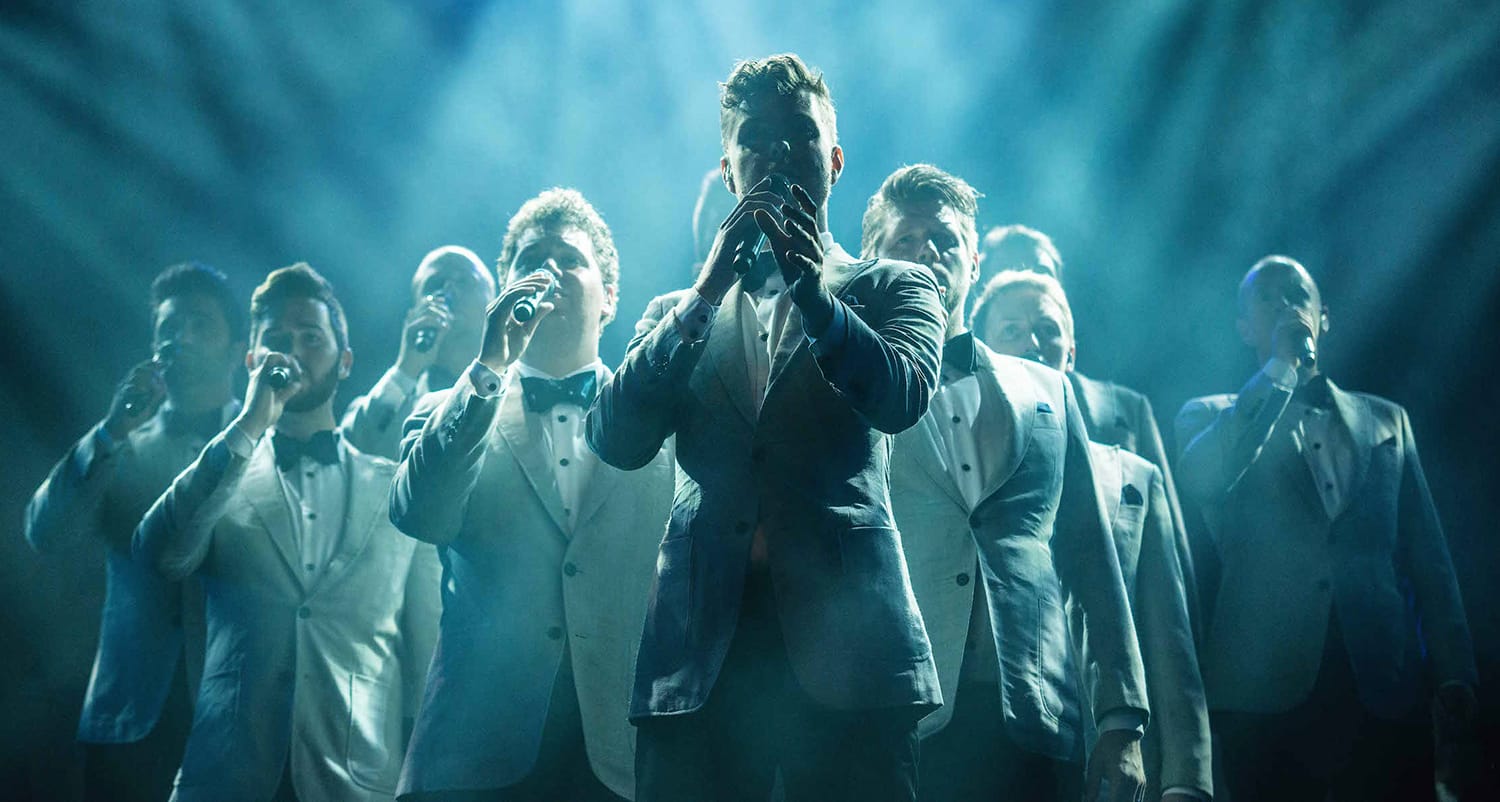
Here's To The Hero's
This is dedicated to all the men and women who have fought and continue to fight for our freedom. Thank you! Song: "Here's to the Heroes " Artist: The Ten…